Short answer (the quick bite): Crumbl Cookies is not a halal-certified brand. Because their flavors rotate weekly and their ingredient lists often include ambiguous items like “natural flavors,” extracts, or marshmallow-type toppings (which can contain gelatin or glycerin), a definitive “yes” or “no” for every Crumbl cookie is impossible without asking about the specific flavor and the supplier of each ingredient. For strict halal observance: avoid unless you can verify the ingredient sources. For those comfortable with scholarly concessions about trace alcohol in flavorings, some plain flavors may be acceptable — but that’s a personal and juristic judgment. (Crumbl Cookies)
Open this post like you would the lid of a warm box of cookies: with curiosity and a little trepidation. The question “Is Crumbl cookie halal?” sits at the sweet intersection of modern food manufacturing, franchised convenience, and centuries-old Islamic dietary law. It asks not only about ingredients, but about transparency, supply chains, and what we are willing to accept in the name of convenience, taste — and faith.
Below I walk you through the heart of the matter: what matters in a cookie, what Islamic scholarship says about the sticky, shadowy ingredients that show up in cookies, how Crumbl presents its information, and practical, faith-friendly choices you can make after reading. This is written to be read straight through — lyrical in places, decisive where needed, and never boring.
What halal means for a cookie
At its core, halal means lawful. For food, this means ingredients must be permissible (no pork, no pork-derived gelatin, no alcohol used as an intoxicant), animals must be slaughtered according to Islamic law if their parts are used, and nothing impure or intoxicating should remain in the finished product. But modern food production complicates that tidy definition: ingredients might be processed, sourced internationally, or described vaguely on labels as “natural flavors,” “emulsifiers,” or “glycerin” — names that hide the question we really want answered: from what animal or chemical were you made?
When a product is halal-certified, an independent authority has traced ingredients and processes and given a green light. Without certification, the Muslim consumer enters a detective story: ingredient lists, supplier transparency, and juristic nuance all play parts.
What Crumbl says
Crumbl publishes nutrition and allergen information on its site and per location, stating common allergens (milk, egg, wheat, soy, tree nuts, peanuts) and noting cross-contamination risks in open kitchens. But Crumbl does not advertise halal certification, and their menu changes weekly with rotating flavors — meaning ingredients and toppings vary by cookie and by store. That makes a blanket halal claim impossible. (Crumbl Cookies)
Food manufacturers often list flavors or “natural flavors” without specifying whether those flavors contain alcohol as a solvent or whether glycerin or gelatin are animal-derived. For a halal-conscious eater, that ambiguity is the crux of the problem.
The usual suspects: ingredients that commonly raise halal concerns
Below are the cookie-world ingredients that most frequently trip halal rules, and what Islamic scholarship generally says about them.
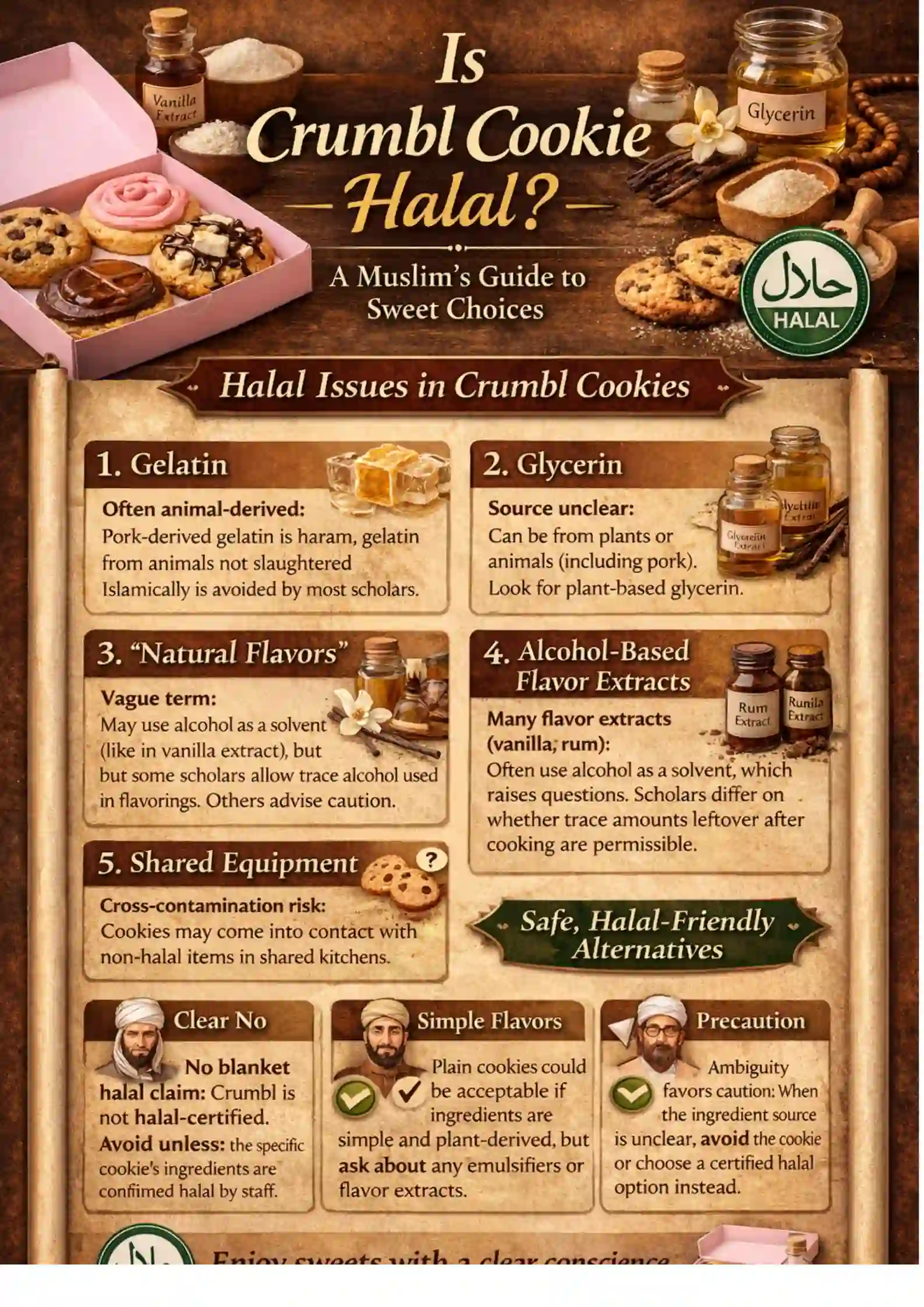
- Gelatin (from animal collagen): If gelatin comes from pork, it is impermissible. Gelatin from animals slaughtered without Islamic rites is also problematic for many scholars. The default position in many fatwas is that pork-derived gelatin is haram. If gelatin is from a halal-slaughtered permissible animal, some jurists allow it; others still ask for clear certification. (Islam-QA)
- Glycerin: Often used in confections to retain moisture, glycerin can be plant-based or animal-based (including pork). Without supplier transparency or certification, you cannot assume a glycerin-containing product is halal.
- “Natural flavors” / flavor extracts (vanilla, rum flavor, etc.): These terms are ambiguous. Many extracts use alcohol as a solvent (vanilla extract being the classic example). Islamic jurists diverge: some say trace alcohol used as a solvent that does not intoxicate and is not present in a beverage form may be excused in cooked/processed foods; others advise caution and disallow it when the source or amount is unknown. There is a widely cited leniency for vanilla extract in baked goods because baking often evaporates the alcohol and the leftover is negligible — but this is not a universal ruling. (Islamweb)
- Emulsifiers, lecithin, enzymes, and stabilizers: These can be plant-, microbial-, or animal-derived. Soy lecithin is common and generally fine; lecithin from ambiguous animal sources raises questions.
- Cross-contamination and shared equipment: Even if an individual cookie has “halal” ingredients, equipment washed in a facility processing pork-derived items or impure alcohols may lead some consumers to avoid the product.
Because Crumbl’s flavors use toppings (marshmallow, caramel glazes, flavored drizzles), the chance of one of these problematic ingredients appearing is real.
What Muslim scholars (fatwa) broadly say
Rather than quote a single fatwa as gospel, here is the practical, consensus-level guidance distilled from major online juristic resources:
- Gelatin from pigs is forbidden. Gelatin that originates from permissible animals but not slaughtered according to Islamic rites is treated with caution; many scholars prefer alternatives or clear halal certification. (Islam-QA)
- Alcohol in flavorings: If alcohol has a clear intoxicating effect or remains in a product in non-negligible amounts, it is forbidden. If alcohol is merely a solvent used in tiny amounts and the final product’s alcohol is negligible or evaporated (as often argued for baked goods), several scholars allow it; others still recommend avoiding it for those who wish to be extra careful. This is a juristic difference of emphasis between precaution (sadd al-dhara’i) and concession. (Islamweb)
- Ambiguity favors caution for the devout: If you cannot trace the source of gelatin, glycerin, or other suspect ingredients, the safest path is to avoid that product or choose certified alternatives. Many contemporary halal authorities urge consumers to prioritize halal-certified products where available.
These principles mean: an un-certified brand with rotating flavors and vague ingredient descriptions is risky for those strict about halal compliance.
How the rules apply to Crumbl specifically
Putting together what Crumbl publishes and what scholars advise, we reach a few practical conclusions:
- No blanket halal claim. Crumbl is not halal-certified. That fact alone is decisive for many consumers. (Crumbl Cookies)
- Some flavors are more likely to be acceptable than others. A simple cookie made of flour, sugar, butter, eggs, and chocolate chips has fewer red flags — provided the chocolate chips and any emulsifiers are not derived from impure sources. But a cookie crowned with marshmallow, gelatin-based fillings, foreign-sourced “natural flavors,” or liqueur-infused glazes introduces unknowns. (rima recipes)
- Weekly rotation increases uncertainty. What was “safe” last week might be replaced by a risky topping this week. This moving target pushes the balance toward seeking certification or choosing verified alternatives. (Crumbl Cookies)
Real-world steps you can take
If you love the idea of Crumbl’s cookies but want to stay halal, here’s a no-nonsense checklist:
- Ask the store for an ingredient list for the specific flavor. Some franchises will share supplier info. Request whether marshmallows, gelatin, or glycerin are used and whether glycerin is plant-based.
- Ask whether any flavoring is alcohol-based. If vanilla or other extracts are used, ask whether alcohol is used as a solvent and whether the amount is negligible after baking. If the staff cannot or will not answer, treat the item as ambiguous.
- Choose simple, non-decorated flavors. Plain chocolate chip or snickerdoodle are less likely to contain gelatin or exotic emulsifiers — but still check for glycerin or ambiguous “natural flavors.”
- Prefer halal-certified products. If you need certainty (weddings, fast days, or personal conviction), choose brands or bakeries with halal certification. Certification matters because it documents ingredient sources and processes.
- Make your own copycat at home. If you enjoy baking, making the cookie at home using clearly halal ingredients is the most spiritually comfortable route and often more delicious.
- When in doubt, abstain. Many scholars advise avoidance in the face of uncertainty (istishab and sadd al-dhara’i principles), especially for items that are not necessities.
Alternatives to Crumbl that keep faith and flavor together
If Crumbl’s lack of certification bothers you, try these alternatives:
- Certified halal bakeries and brands: Search locally for halal-certified bakeries or chains that explicitly state halal certification. Many Muslim-majority cities and neighborhoods maintain lists of halal-certified dessert shops.
- Make a Crumbl-style cookie at home: Use a trustworthy recipe and halal-certified chocolate chips, vanilla extract (or vanilla paste/extract labeled alcohol-free), and plant-based glycerin if needed.
- Look for “gelatin-free” marshmallows or “beef gelatin, halal-slaughtered” labels when a recipe or product requires gelatin.
Final verdict
Crumbl Cookies, as a brand, cannot be declared halal across the board because it is not halal-certified, its menu rotates, and its ingredient labels often contain ambiguous terms that allow for non-halal sources such as pork gelatin or animal-derived glycerin. For the careful Muslim consumer, that ambiguity is decisive: do not assume halal. For those who accept juristic concessions about trace alcohol in baked goods, some simple flavors might be permissible — but that acceptance depends on reliable information about ingredient sources, which Crumbl does not centrally provide to the level many halal authorities require. (Crumbl Cookies)
If you want to enjoy cookies without faith-based doubt, choose halal-certified makers, make your own, or ask detailed supplier questions before you buy. The sweetness of a cookie is most palatable when eaten with a clear conscience.
Useful references
(These are the main sources I used to compile this post — use them to verify details and follow up.)
- Crumbl — Nutrition & Allergen Information (per location): Crumbl’s official store nutrition/allergen pages show ingredient/allergen notices and note open-kitchen cross-contact. (Crumbl Cookies)
- Islamic rulings on gelatin and animal-derived products — IslamQA: Ruling that gelatin from impure animals is not permissible. (Islam-QA)
- Islamic views on alcohol in flavorings — IslamWeb / fatwa discussions on vanilla extract and trace alcohol in baking. These explain the juristic nuances and the common concession regarding tiny, non-intoxicating traces in cooked goods. (Islamweb)
- Consumer analysis on Crumbl and halal status — independent write-ups examining Crumbl’s lack of halal certification and ingredient ambiguity. (rima recipes)