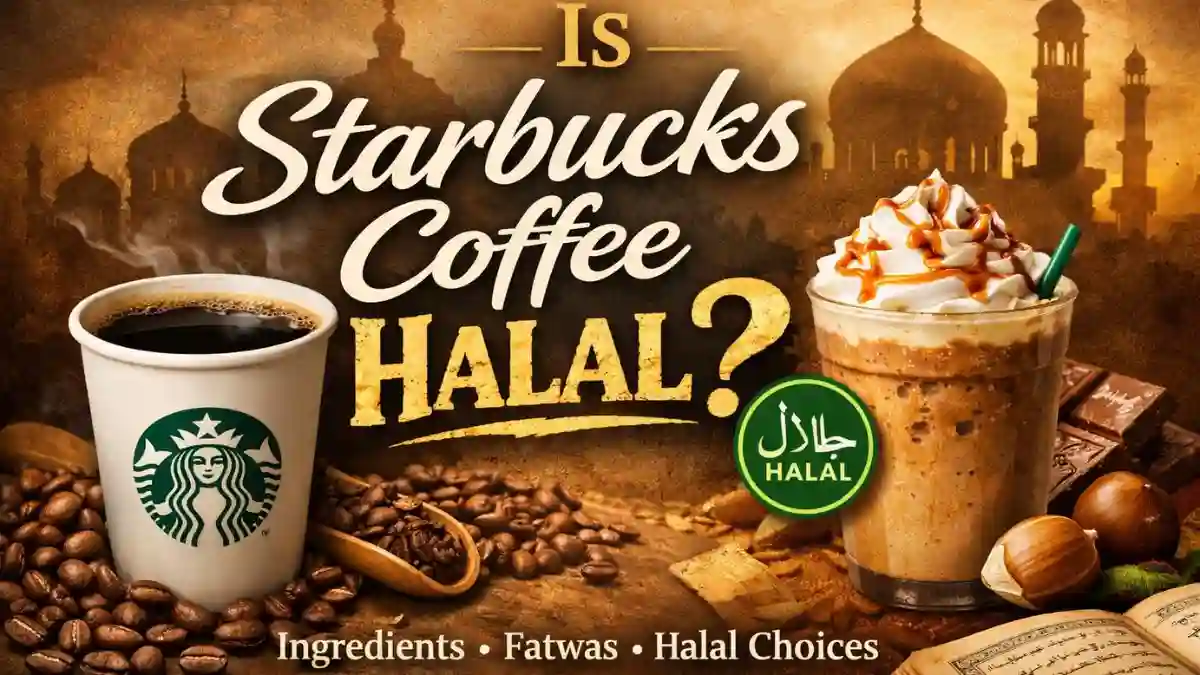
The first thing that reaches you is not the coffee. It’s the smell. That deep, roasted aroma drifting through the air as you pass by a Starbucks outlet — promising warmth, focus, comfort, and a moment of pause in a restless world. For many, it’s just coffee. For a Muslim, however, it quietly raises a deeper question:
“Is this halal… or am I compromising my faith for convenience?”
This question isn’t about paranoia. It’s about conscious consumption — something Islam takes very seriously. So let’s answer it clearly, honestly, and without sugarcoating.
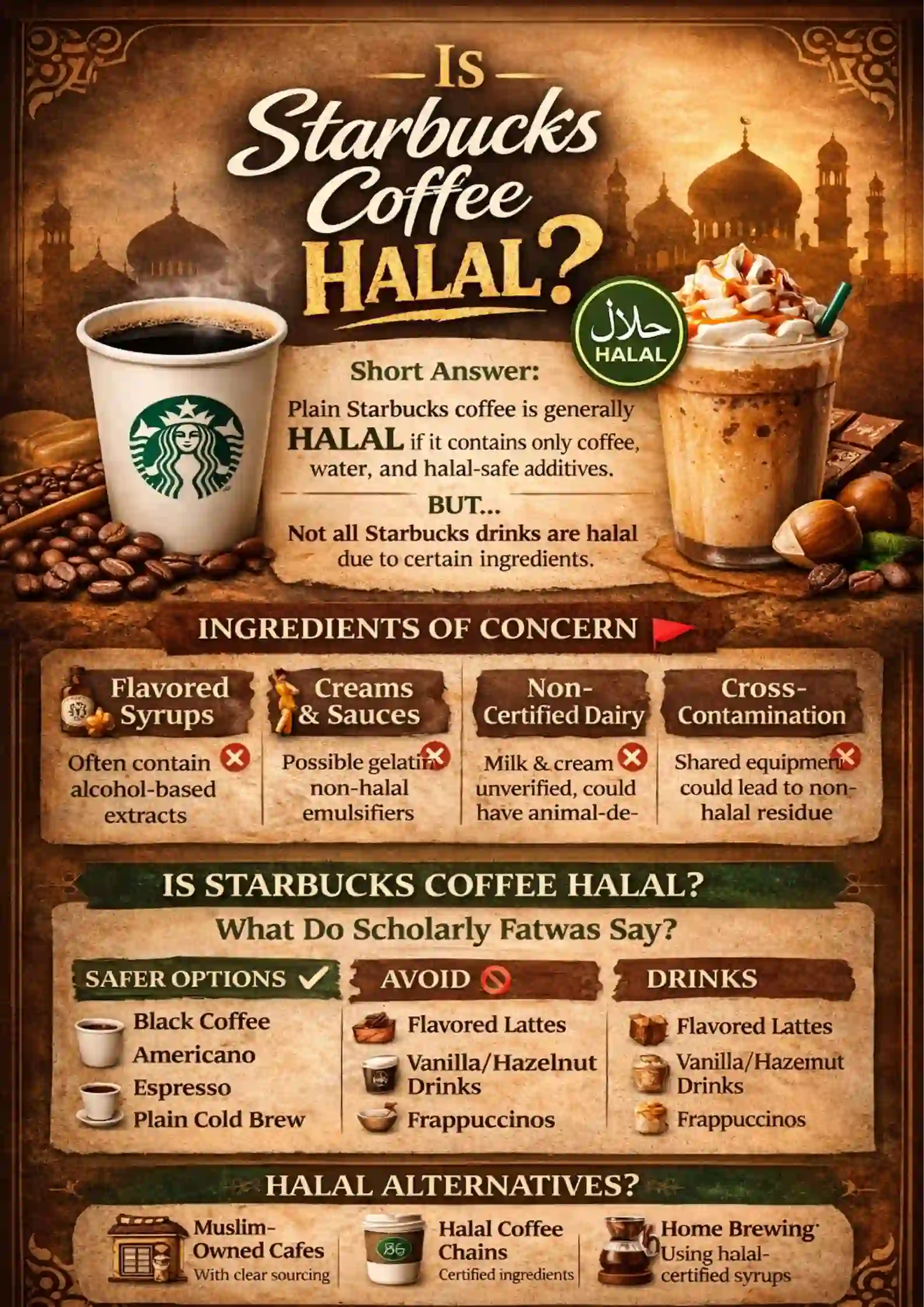
Short Answer
Yes, plain Starbucks coffee is generally halal — if it contains only coffee, water, and halal-safe additives.
❌ However, many Starbucks drinks are NOT automatically halal due to:
- Alcohol-based flavorings
- Non-halal emulsifiers
- Unverified dairy and syrups
- Cross-contamination risks
👉 Not all Starbucks drinks are equal in halal status.
Now let’s unpack this properly — ingredient by ingredient.
Why This Question Even Matters in Islam
Islam does not forbid enjoyment. But it does forbid negligence.
Allah says:
“O mankind, eat from whatever is on earth [that is] lawful and good…” (Qur’an 2:168)
Notice the two conditions:
- Halal (lawful)
- Tayyib (pure, wholesome, clean)
Something can be technically lawful but still questionable — and Islam encourages clarity, not blind trust.
Understanding Starbucks at Its Core
Starbucks is:
- A global corporation
- Operating in non-Muslim-majority standards
- Not officially halal-certified worldwide
This alone doesn’t make it haram — but it means the responsibility shifts to the consumer.
Ingredient Analysis । What’s Really in Starbucks Coffee?
Let’s break this down into layers.
1. Plain Brewed Coffee (Black Coffee)
Ingredients:
- Coffee beans
- Water
Halal Status: ✅ Halal (by consensus)
Why?
- Coffee beans are plant-based
- No fermentation into intoxicants
- No animal-derived ingredients
📌 Scholarly view: Classical and contemporary scholars agree that coffee itself is halal, as it does not intoxicate in the Islamic sense.
Espresso-Based Drinks
The base is still halal.
The concern starts with add-ons.
Milk Issues:
- Milk itself is halal
- But:
- Is it mixed with enzymes?
- Are stabilizers animal-derived?
In most Western countries, milk is generally considered halal, unless proven otherwise.
➡️ Verdict:
✅ Halal in principle, but borderline if not verified
Flavored Syrups – The Biggest Red Flag
This is where many Muslims unknowingly cross into shubha (doubtful matters).
Why syrups are problematic:
- Some contain alcohol as a solvent
- Some use vanilla extract (often alcohol-based)
- Ingredient transparency varies by country
Examples:
- Vanilla Syrup
- Hazelnut Syrup
- Caramel Syrup
Even if alcohol is not intoxicating, its presence as an ingredient is a major scholarly concern.
📌 Key Fiqh Principle:
If alcohol is intentionally added as an ingredient, it is impermissible — regardless of quantity.
➡️ Verdict: ⚠️ Doubtful to Haram (depending on syrup source)
Whipped Cream, Sauces & Toppings
These may contain:
- Gelatin (animal source unclear)
- Emulsifiers (mono- & diglycerides)
- Artificial flavors
Unless labeled vegetarian or halal, these ingredients remain questionable.
➡️ Verdict: ⚠️ Shubha (doubtful)
Cold Brew & Nitro Cold Brew
These are popular — and misunderstood.
Cold brew is not fermented by default.
However:
- Extended steeping
- Storage time
- Flavor infusions
can sometimes raise fermentation concerns — though rare.
➡️ Verdict:
✅ Halal if plain, ❌ questionable if flavored
What About Alcohol in Starbucks Drinks?
Let’s be precise.
Starbucks does not sell intoxicating alcoholic beverages in most locations.
However:
- Alcohol may be used in flavor extraction
- This alcohol does not evaporate fully
- It is added intentionally
📌 Major scholarly opinions:
Scholars Who Prohibit
- Permanent Fatwa Committee (Saudi Arabia)
- Sheikh Ibn Uthaymeen
- Many contemporary fiqh councils
Their stance:
Any added alcohol — even in small amounts — is haram.
Minority Lenient Views:
Some scholars allow chemically transformed alcohol (istihalah) — only if transformation is complete.
➡️ Starbucks does not guarantee complete transformation.
Official Fatwas & Scholarly Positions
1. IslamQA (Salafi position)
- Coffee is halal
- Drinks with alcohol-based flavorings are haram
2. Mufti Taqi Usmani
- Avoid doubtful food when halal alternatives exist
3. European Council for Fatwa & Research
- Permissibility depends on ingredient verification
📌 Common ground:
When in doubt, abstention is closer to taqwa.
Is Starbucks Halal-Certified?
Short answer: ❌ No (globally)
Some local branches in Muslim countries may:
- Use halal milk
- Avoid alcohol-based syrups
But no universal certification exists.
Practical Halal Guide । What You CAN Safely Order
✅ Safer Options:
- Black Coffee
- Americano
- Espresso
- Plain Cold Brew
- Coffee with plant-based milk (no syrup)
⚠️ Avoid:
- Flavored lattes
- Vanilla / Hazelnut drinks
- Frappuccinos
- Seasonal drinks (Pumpkin Spice, etc.)
Halal-Friendly Alternatives to Starbucks
If you want peace of heart, consider:
☕ Muslim-Owned Cafés
- Clear ingredient sourcing
- Often halal-certified
☕ Home Brewing
- French press
- Pour-over
- Halal syrups (certified brands)
☕ Halal Coffee Chains (where available)
- Better transparency
- No alcohol-based additives
The Deeper Question । Is It Worth the Doubt?
The Prophet ﷺ said:
“Leave that which makes you doubt for that which does not make you doubt.”
(Tirmidhi)
This isn’t about declaring Starbucks haram wholesale. It’s about intentional living. You don’t lose anything by choosing certainty — But you may lose barakah by ignoring doubt.
Final Verdict । Is Starbucks Coffee Halal?
✔️ Yes — plain coffee is halal.
⚠️ Many Starbucks drinks are doubtful.
❌ Some flavored drinks may be haram due to alcohol-based ingredients.
The ruling depends on what you order — not the brand name.
Does Intention Matter If the Ingredients Are Doubtful?
Many Muslims find comfort in a familiar sentence:
“My intention is clean. I’m not trying to consume anything haram.”
And intention does matter — deeply.
The Prophet ﷺ said:
“Actions are judged by intentions.” (Bukhari & Muslim)
But here is the nuance often ignored:
👉 Intention does not turn the haram into halal.
👉 Niyyah cannot purify doubtful ingredients.
Islam is not a religion of emotional comfort; it is a religion of moral responsibility.
If someone knowingly consumes something questionable while having full access to halal alternatives, the problem is not intention — it is negligence.
The Concept of Shubha
The Prophet ﷺ clearly warned:
“The halal is clear, the haram is clear, and between them are doubtful matters which many people do not know. Whoever avoids the doubtful has protected his religion and his honor.”
(Bukhari & Muslim)
Starbucks does not operate in the realm of clear halal.
It operates in the grey zone — ingredient ambiguity, alcohol-derived flavorings, and global sourcing opacity.
This is exactly the territory the Prophet ﷺ advised believers to step away from, not normalize.
Why I Didn’t Know Is Not Always a Defense
In Islamic ethics, ignorance is excusable only when knowledge is genuinely inaccessible.
But today:
- Ingredient lists are available
- Scholarly discussions exist
- Halal alternatives are widespread
So continuing to consume doubtful items becomes a choice, not an accident.
A conscious Muslim does not ask:
“Is this popular?”
He asks:
“Will this stand clean before Allah?”
How Global Brands Handle Halal । And Why Muslims Must Ask Questions
Starbucks is not hostile to Islam. But it is also not accountable to Islamic law.
This distinction is critical.
The Corporate Reality
Global brands operate on:
- Cost efficiency
- Flavor consistency
- Legal compliance — not religious compliance
If alcohol-based vanilla extract is cheaper and legally acceptable, it will be used — unless there is strong consumer pressure.
Silence from Muslim consumers sends a message:
“This doesn’t matter.”
And corporations respond accordingly.
The Dangerous Myth of “If It Were Haram, It Would Be Obvious”
Many Muslims assume:
“If something was haram, it would be clearly labeled.”
But Islamic dietary law is more detailed than food safety law.
What is legally edible is not automatically halal.
Examples:
- Alcohol as a solvent
- Animal-derived emulsifiers
- Cross-contamination
- Non-slaughtered animal enzymes
None of these violate secular regulations — But they directly affect halal status.
The Responsibility of the Modern Muslim Consumer
Islam does not require Muslims to isolate themselves from society. But it does require awareness.
Allah says:
“And do not follow that of which you have no knowledge.” (Qur’an 17:36)
Asking questions is not extremism. It is obedience.
When Muslims:
- Ask about ingredients
- Request halal alternatives
- Support halal-certified businesses
They shift the market.
Halal was never meant to be hidden. It was meant to be upheld.
Why Silence Harms Future Generations
Children learn habits, not fatwas. When they see parents prioritizing convenience over clarity, they internalize the message:
“Faith bends when it’s uncomfortable.”
But when they see restraint, questions, and alternatives, they learn:
“Faith leads — even in small choices.”
And sometimes, faith is not tested in the mosque, but at the coffee counter.
Closing Reflection (Optional Transition Line)
Starbucks coffee may seem like a small matter. But Islam teaches us that small compromises train the heart for bigger ones. And taqwa often begins not with grand sacrifices — but with walking away from what doesn’t feel clean.
Conclusion । Coffee With Conscience
Islam doesn’t ask you to abandon the world. It asks you to navigate it with awareness. So the next time you step into Starbucks and smell that rich roast, remember:
☕ Drink coffee.
🤍 Keep your heart clean.
🕌 Protect your faith — even in small cups.
Because halal isn’t just about food. It’s about who you choose to be when no one is watching.