Imagine a loaf pulled from the oven: a dark, crackled crust, steam ghosting the kitchen air, a tang that is at once rustic and comforting. To many Muslims the question isn’t whether it’s delicious — it’s whether it’s permissible. This post walks that path slowly and plainly: the science (what actually happens in sourdough), the fiqh (what scholars have said), a careful ingredient-by-ingredient breakdown in a table, practical rules you can use, and halal alternatives if you want absolute certainty. I’ll give references and fatwas so your readers can follow the sources.
Quick roadmap
Yes.— With an important and honest caveat: sourdough is considered halal in the vast majority of cases, but the question needs nuance because fermentation produces tiny amounts of alcohol and scholars differ on how to treat trace ethanol and deliberately added alcohol. (IslamQA)
- What sourdough is and why some worry (tiny ethanol from fermentation). (ScienceDirect)
- What Islamic scholars say — the range of opinions and principle differences. (مجمع الفقه الإسلامي الدولي)
- Ingredient analysis table (easy to copy).
- Practical guidance and halal alternatives.
- Full references and short notes.
What sourdough is the tidy science
Sourdough is bread leavened by a starter — a living culture of wild yeasts and lactic-acid bacteria (LAB) captured from flour and the environment. The microbes metabolize flour sugars and produce two important by-products: carbon dioxide (which makes the dough rise) and small amounts of organic acids and ethanol. The acids give sourdough its tang; ethanol (alcohol) is produced in tiny quantities during fermentation and contributes to aroma and dough properties. When the dough is baked, much of the ethanol evaporates and is transformed by heat and chemical changes in the crumb. Modern food-science reviews and experimental studies confirm that sourdough fermentation produces trace ethanol, but levels in the finished, baked loaf are typically low and far from intoxicating. (ScienceDirect)
Why some people worry alcohol haram?”
The worry comes from a simple chain: fermentation produces ethanol → ethanol is an “alcohol” → intoxicating alcohol (khamr) is forbidden. Two important clarifications change the practical outcome:
- Not all alcohol is the same in legal treatment. Islamic jurists distinguish between intoxicating beverages (khamr) and incidental or trace ethanol that results from natural fermentation in food. Different schools and contemporary jurists apply different criteria (source, quantity, intoxicating potential, and whether the substance was intentionally added). The International Islamic Fiqh Academy (a high-level scholarly body) and several fatwa centres have explicitly allowed the presence of traces of ethanol resulting from natural fermentation when the level is so low it cannot intoxicate. (مجمع الفقه الإسلامي الدولي)
- Evaporation during baking matters. Baking reduces ethanol, sometimes to non-detectable or very low concentrations. Food-science measurements show ethanol is produced during fermentation but decreases significantly after baking — although tiny residues or volatile compounds may remain detectable by instruments. Scientifically there is not zero ethanol in every loaf, but there is also generally no intoxicating effect. (ScienceDirect)
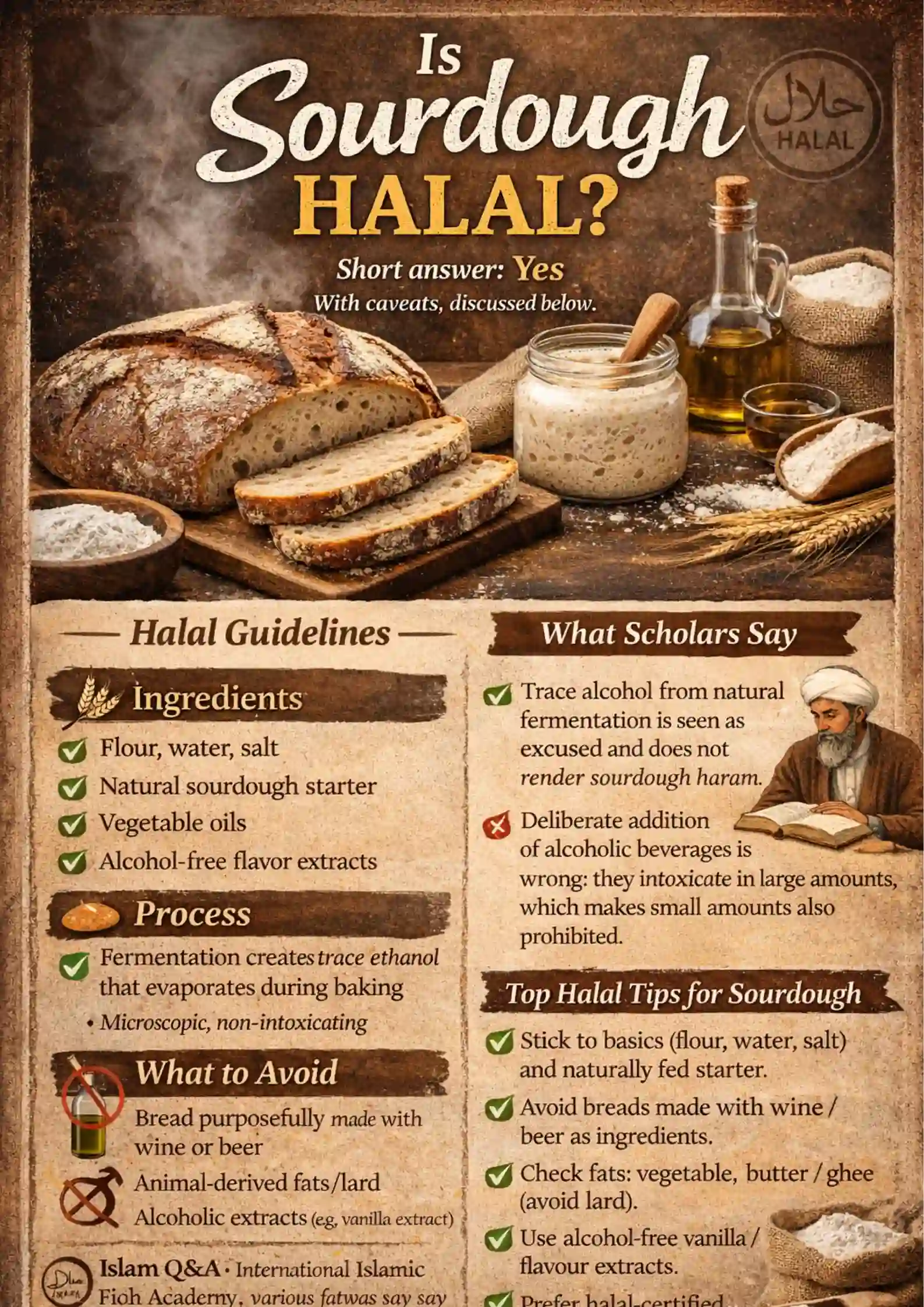
Because of these two facts, the mainstream practical conclusion in many contemporary fatwas and halal authorities is that ordinary sourdough bread is permissible — provided no intoxicating alcohol or other impermissible ingredient was deliberately added. (IslamQA)
What the scholars actually say?
There is not a universal one-line verdict across all jurists. The major positions you will commonly find are these:
- Permissive / mainstream practical position: Trace ethanol produced naturally in bread/sourdough that does not intoxicate is permissible. This is the stance taken in many contemporary fatwas regarding bread and naturally fermented foods; they emphasize that amounts are tiny and historically breads have been consumed by Muslims. Examples: answers collected at reputable fatwa services and fatwa centers which state that bread’s trace alcohol does not render it unlawful. (IslamQA)
- Caveat / conservative position: Some jurists and fatwas warn that deliberately adding alcoholic beverages to cooking is impermissible even if “cooked off,” and some stress that any detectable essence of alcohol may render a food problematic. These opinions underline the principle “that which intoxicates in large amounts, a small amount is also not permissible” and they caution chefs and manufacturers against using alcohol. (Islam-QA)
- Institutional clarifications: The International Islamic Fiqh Academy and similar bodies allow the use of ethanol in industry under strict conditions and accept traces from natural fermentation provided they are non-intoxicating. They also distinguish between khamr (wine and similar intoxicants) and ethanol used as a solvent in industry (when halal alternatives aren’t available). (مجمع الفقه الإسلامي الدولي)
Bottom line for your blog reader: majority practical guidance and several authoritative contemporary bodies treat ordinary sourdough bread as halal. However, readers should avoid breads where alcoholic beverages were intentionally added (for flavour or extraction) or breads containing non-halal animal fats or other haram additives. (SeekersGuidance)
Ingredient analysis — a handy table you can paste into your post
| Ingredient / Process | Typical source or chemistry | Halal concern | Short verdict & recommendation |
|---|---|---|---|
| Flour (wheat, rye, etc.) | Grain — plant-based | None | Halal. Use certified flour if you want absolute supply-chain checks. |
| Water | Tap / filtered | None | Halal. |
| Salt | Mineral | None | Halal. |
| Sourdough starter (wild yeast + LAB) | Naturally occurring microbes in flour/air | Produces trace ethanol during fermentation | Generally halal — trace ethanol from natural fermentation is widely considered permissible. Avoid starters fed with alcoholic liquids. (ScienceDirect) |
| Commercial yeast (Saccharomyces) | Cultured yeast | Produces trace ethanol during leavening | Generally halal — same practical ruling as starter yeast. (PMC) |
| Added beer/wine/spirits (as ingredient) | Deliberate alcohol addition | Major concern — many scholars say adding khamr is impermissible even if cooked; avoid. | Not halal if alcoholic beverage deliberately added. (Islam-QA) |
| Sugars / malt extract | Plant-derived (sugar, barley malt) | Malt from barley (non-alcoholic) is okay; malt extract used in baking is not alcoholic | Halal, but check if malt extract is produced with spirits for extraction. |
| Milk / milk powder | Dairy | Dairy is halal unless contaminated by haram enzyme/rennet | Halal, double-check any enzyme/rennet used in dairy if present. |
| Butter / ghee | Dairy | Halal unless mixed with animal fat (e.g., lard) | Halal if dairy-sourced; avoid animal lard. |
| Vegetable oils | Plant-based | None | Halal. |
| Flavourings (vanilla extract, rum flavor) | Some contain alcohol (e.g., vanilla extract) | Vanilla extract is often alcohol-based | Check: use alcohol-free vanilla or vanilla paste for halal assurance. |
| Bread improvers / enzymes | Industrial additives | Could be derived from non-halal animal sources in rare cases | Check labels; prefer halal-certified bakery ingredients. |
| Cross-contamination risk (shared equipment) | Shared lines with non-halal products | Practical concern for strict consumers | Label-check or choose halal-certified bakery. |
(Notes: “trace ethanol” here means measurable by instruments in some cases, but not in amounts that intoxicate. See science and fatwa references.) (ScienceDirect)
Practical rules for readers
- If the recipe only uses flour, water, salt, and a starter — it’s almost always halal. The trace ethanol produced is typical and non-intoxicating; many fatwas accept this. (IslamQA)
- Avoid breads or sauces that list wine, beer, or spirits as an ingredient. Many scholars treat deliberate addition of khamr as forbidden even if cooked. (Islam-QA)
- Be cautious with “flavour extracts.” Vanilla extract and similar flavourings often use alcohol as solvent — replace with alcohol-free alternatives.
- Check fats. If a bread uses lard or animal shortening of unknown origin, that is problematic. Prefer vegetable oils, butter, or ghee from halal sources.
- When in doubt, choose halal-certified breads or ask the bakery. Certification matters if you need supply-chain assurance. (ISA Halal)
- If you want to be extra cautious, choose breads whose starters are fed only with flour & water (not beer/wine), and avoid added extracts that use alcohol.
Short technical note | does baking remove the alcohol completely?
No — baking reduces ethanol substantially, often to undetectable or minute levels depending on time, temperature and dough composition. But instruments can sometimes still detect tiny volatile compounds (not enough to intoxicate). The juristic question is how to treat these trace residues: many jurists and halal bodies permit such trace residues from natural fermentation; some conservative jurists insist deliberate use of alcoholic beverages in cooking is impermissible, regardless of evaporation. The International Islamic Fiqh Academy’s practical rulings accept traces from natural fermentation that do not intoxicate. (ScienceDirect)
Fatwas and authorities you can quote
- Islam Q&A (on sourdough and bread): States that sourdough bread is halal because incidental non-intoxicating alcohol does not render food haram. (Answer: “Yes, sourdough bread is halal.”) (IslamQA)
- Islamic Fiqh Academy (IIFA): Allows trace ethanol from natural fermentation and permits some technical use of ethanol in industry when alternatives aren’t available, with limits. This institutional view supports permissibility of trace ethanol that cannot intoxicate. (مجمع الفقه الإسلامي الدولي)
- SeekersGuidance / Maliki note: Maliki-school guidance highlights that trace alcohol is unavoidable and does not make bread impure or unlawful; ripe fruit and many foods contain small alcohol amounts naturally. (SeekersGuidance)
- Caveat from some contemporary fatawa: Some fatwas emphasize that adding alcoholic drinks to cooking is impermissible, even if the cook claims it “cooks off,” because the essence or effect of alcohol may remain. Present both views to your readers. (Islam-QA)
Halal alternatives and tips for baking and product development
- Use alcohol-free extracts (vanilla paste, concentrated water-based flavorings).
- Avoid using beer/wine as flavouring or dough liquid. Use malt syrups or caramelized sugar for color and flavor instead.
- If selling commercially, get halal certification. Certification covers cross-contamination, enzymes, emulsifiers and supply-chain issues. (ISA Halal)
- Label transparently: if a product includes any alcohol-derived ingredient (even for industrial processing), state it so consumers can choose.
Read More:
Real-world edge cases
- “Sourdough starter that smells strongly of alcohol” — smell alone doesn’t equal intoxicating alcohol; starters often smell fruity/ethanol because microbes produce volatile compounds. A starter fed with alcoholic beverages would be a different story. For the conservative reader: discard starters that were cultivated with wine/beer. (IslamWeb)
- Bread made with “culinary wine” or beer — avoid. Many jurists say deliberate addition of khamr is impermissible regardless of evaporation. (Islam-QA)
- Commercial enzymes or emulsifiers of unclear origin — these occasionally derive from animal sources; halal certification or supplier information solves this.
Conclusion
Yes — ordinary sourdough is generally halal. The microbial fermentation that makes sourdough distinct produces trace ethanol, but scientific evidence and many contemporary juristic rulings treat these tiny, non-intoxicating residues as permissible. However, a few important conditions matter: the starter and dough should not have been intentionally made with alcoholic beverages; flavors and improvers that are derived from alcohol should be checked; and any animal-derived fats or enzymes must be halal-sourced. If a reader wants absolute, certified assurance, choose halal-certified bread or make sourdough at home with simple ingredients (flour, water, salt, starter) and alcohol-free flavourings. (ScienceDirect)
References
- “Is sourdough bread halal?” — Islam Q&A (Fatwa page on sourdough). (IslamQA)
- Arora K., review: “Thirty years of knowledge on sourdough fermentation” (ScienceDirect / food microbiology review — fermentation produces ethanol but baked goods contain much lower levels). (ScienceDirect)
- PubMed Central — “Sourdough bread quality” and fermentation effects (recent open-access review). (PMC)
- International Islamic Fiqh Academy (IIFA) — rulings on ethyl alcohol as solvent and natural fermentation traces. (مجمع الفقه الإسلامي الدولي)
- IslamWeb / fatwa about starter smelling of alcohol — clarifies that smell ≠ intoxicating alcohol; warns against adding intoxicants. (IslamWeb)
- SeekersGuidance / Maliki perspective on trace alcohol in bread. (SeekersGuidance)
- Islam Q&A: “Is alcohol in food haram?” — presents a more conservative nuance about deliberate addition of alcohol to cooking. Useful for balanced presentation. (Islam-QA)